Something that makes SUES particularly special is our series of courses. This year we are offering five courses; these vary in length between four and ten sessions. Sessions are on Mondays from 10:30 am to 12:30 pm at All Saints Church Hall.
The course fee is based on the number of sessions and ranges from £20 for a four-session course to £50 for a ten-session (nine plus gallery visit) course. Refreshments (tea/coffee/biscuits) are included in the fee.
No prior knowledge of the topic is required and the sessions are informal, with the opportunity for questions, discussion and contributions. Lecturers make extensive use of illustrations, using PowerPoint and digital technology.
How to Enrol
SUES Members may enrol on a course at any time up to seven days before the first lecture. Please complete the Enrolment Form, indicating which course(s) you wish to attend, and how you wish to pay. Bank transfer is our preferred method of payment as it does not incur bank charges. If you are unable to use bank transfer, SUES can accept payment by cheque. Please do not send cash.
If you wish to pay by cheque, or if you have any difficulties or questions about enrolment on a course, please contact the Membership Secretary, whose details are on the Contacts Page.
Course 1: The World of Imperial Rome – Julia Clayton
THIS COURSE IS NOW FULL
14th, 21st, 28th September; 5th, 12th October 2026.
Course Fee: £25
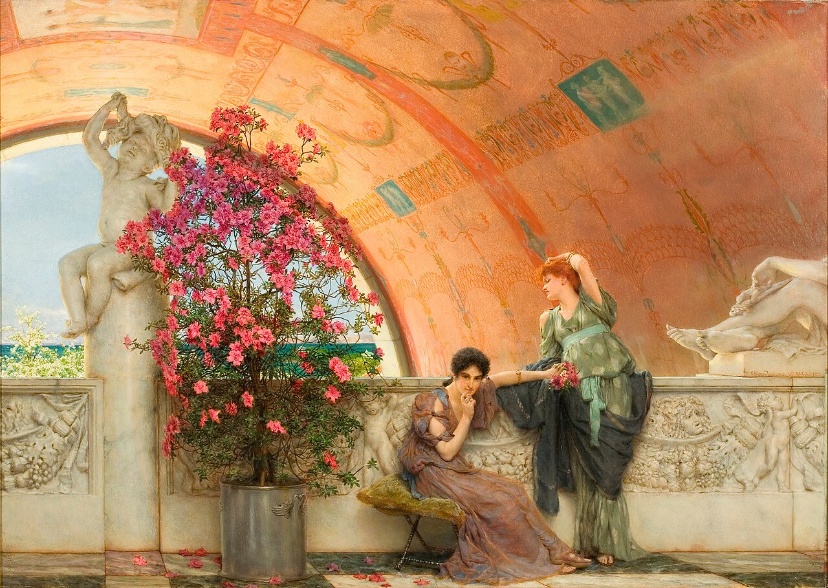
Where did the story of Romulus and Remus come from? What did Vestal Virgins actually do? Why did the Romans see the Druids – and the Christians – as a threat to their Empire? Is it an insult to call someone a ‘pleb’? And how did a republic which had lasted for five hundred years come under the sway of a single ruler?
This five-week course uses the art and literature of Early Imperial Rome, from Augustus to Hadrian, to explore the workings of Roman society, religion and politics. Starting with the foundation myths of Rome, and the more modern ‘myths’ which formed the basis of Augustus’s power, we will move on to examine the social structure of Rome (including the position of women, slaves and freedmen) and the workings of the patronage system, the ‘glue’ that held Roman society together. Later sessions will look at how the Roman Empire was run, and how the Imperial image was presented through statues and coins. The course will also explore Roman state religion and attempts to complement it by Greek philosophies such as Stoicism and Epicureanism, as well as looking at Oriental mystery cults: the cults of Mithras, Cybele, Isis and Christianity itself. Throughout the course we will focus on how archaeologists, classicists and novelists have tried to reconstruct life in Imperial Rome, as well as the continuing impact of ancient Rome on the modern world.
Julia Clayton was Head of Classics at King George V College, Southport, from 1996 to 2019. In 2019 she completed an MA in Creative Writing at Edge Hill University and has subsequently had several short stories published, mostly on themes relating to art and archaeology. In May 2024 she completed a PhD at Edge Hill on Invented Artworks in Fiction, including Classical reception in fictional artworks. She is a regular speaker at the Atkinson and the Classical Association (Southport & Birkdale branch).
Julia’s blog on the afterlife of Greek art (including a piece on Southport Monument) can be found at https://classicalclayton.blogspot.com
Course 2: Art in the Long 19th Century – Ed Montana Williams
THIS COURSE IS NOW FULL
19th, 26th October; 2nd, 9th, 16th, 23rd, 30th November; 7th, 14th December 2026.
Course Fee: £50. (The course fee includes a visit to the Walker Art Gallery, probably on Friday 4th or 10th December 2026, date to be arranged.)
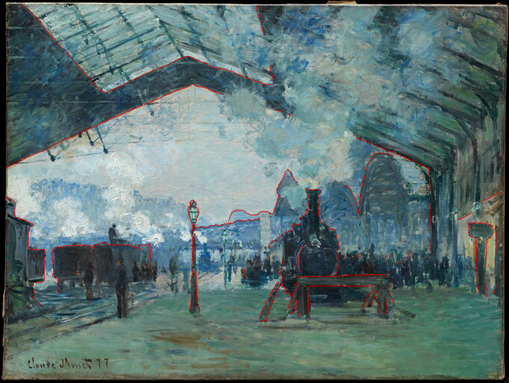
The technological and industrial changes, witnessed between the momentous years of 1789-1914, heralded major sociological, economic and political changes across the Western Hemisphere and beyond. These changes had a profound impact upon the visual arts as artists responded to new urban environments and visual experiences.
Art in the 19th Century is often typified by staid, rather saccharine, depictions, but the reality is that the artworks created in this period were truly revolutionary. They reflected new ideas and new approaches, works which would herald the emergence of modern art.
Spanning 125 years, this course considers how the artists of the Long 19th Century sought to challenge convention, and to change forever, our perceptions of the art world.
Ed Montana Williams is an Oxford-educated art historian and is passionate about sharing his love of the History of Art to a range of audiences. Ed is an Arts Society lecturer and regularly speaks to specialist interest groups as well as U3A and WI groups. He works at Tate Liverpool, delivering tours and talks and also teaches History of Art at the University of Liverpool’s Department of Continuing Education. He is a member of the International Association of Art Critics and has been published in several journals and online publications.
Course 3: I Can Not Believe There is More Pathology – Tim Helliwell
4th, 11th, 18th, 25th January; 1st February 2027.
Course Fee: £25
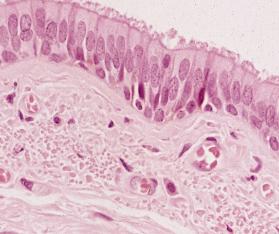
This is series 3 of the course that aims to improve your knowledge of health problems, demystify the jargon and help you understand conversations with healthcare professionals. The 2027 course will include a selection of skin, blood, kidney, brain and gynaecological problems as well as anything topical that emerges during the year. As before, the course will include an introduction to basic concepts for newcomers and those who need their memories refreshed. Discussion is encouraged and digressions into relevant art and history are inevitable.
SUES Committee member Tim Helliwell is now happily retired and was formerly Consultant Histopathologist and Honorary Professor of Pathology at the University of Liverpool. He has been involved in undergraduate and postgraduate medical education, locally, nationally and internationally. He has eclectic research interests and major interests in quality assurance of laboratories and in standards of pathology through national and international practice guidelines.
Course 4: From James II to George II: Britain from 1685 to 1745 – Roger Mitchell
8th, 15th, 22nd February; 1st, 8th, 15th, 22nd March 2027.
Course Fee: £35
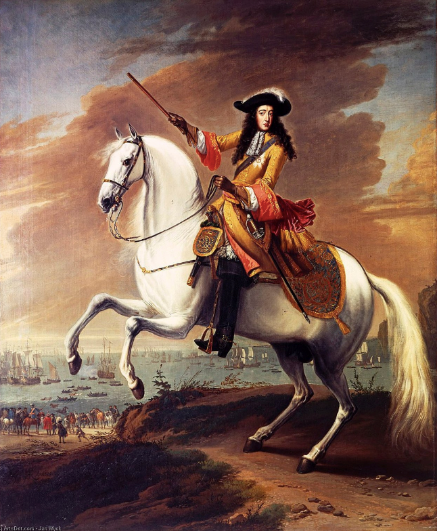
Having covered the reigns of Charles I and Charles II in some detail, this new course takes a wider view and introduces six monarchs: four Kings and two Queens. They are not a particularly charismatic group but they presided over a fascinating period of British history which saw great changes, both in foreign policy and in relations between monarch and Parliament. John Churchill, Duke of Marlborough, and Robert Walpole, Earl of Orford, are the two dominant political figures and we will look closely at them and at their houses – Blenheim Palace and Houghton Hall. Other great houses built in this period include Chatsworth and Castle Howard and we will look at patrons like the 1st Duke of Devonshire and architects such as Sir John Vanbrugh.
Roger has been teaching courses at All Saints for a quarter of a century (as long as Charles II’s reign!), first for University of Liverpool Continuing Education and latterly for SUES.
A former Vice Principal of KGV, he was an Arts Society Lecturer for many years. He lives in Aughton and is Secretary of SUES.
Course 5: Astronomy – Bob Mount
12th, 19th, 26th April; 3rd May 2027.
Course fee £20

1st session: An Introduction to Astronomy. This gives an essential, comprehensive grounding on the subject, far more than Rick Tyers’ talk covered in April 2026.
2nd session: Part 1, Neptune – Discovering the 8th Planet. Part 2, The Andromeda Galaxy – Big Sister to The Milky Way.
3rd session: Intelligent Alien Life – is There Anyone There? The answer may surprise you!
4th session: The Life and Times of Sir Isaac Newton – Alchemist, Astrologer, Scientist, Mathematician, Politician, Priest, Theologian, Master of the Mint.
Bob Mount is an aeronautical engineer and a member of the Royal Aeronautical Society (SAS), with an MSc in Fluid Mechanics. He served 34 years as an engineering officer in the Corps of Royal Electrical and Mechanical Engineers, retiring as a Colonel in 2005. He is a member of Southport Astronomical Society, manages the Baxendell Observatory in Southport on behalf of Sefton MBC, oversees observatory open days and demonstrates the telescope. He is Group Leader of Southport U3A Astro Group which he set up in 2017.
His outreach activities over the past 14 years include: lecturing Astrophysics to A-level students in Sefton schools; talks on astronomy to junior and high school pupils, including those with special needs; and presentations on astronomy to other astronomy societies, U3As, charities, and churches.